
Soccer IQ test for kids: 10 game situations
Ten youth game moments, three choices each. Answers and a one-line reason are at the bottom. Updated October 15, 2026.
How to use it
Read each situation. Choose A, B or C. Then check the answers at the bottom. Play it with your child and ask “why did you pick that?” This is for practice and talking. It is not a score of ability.
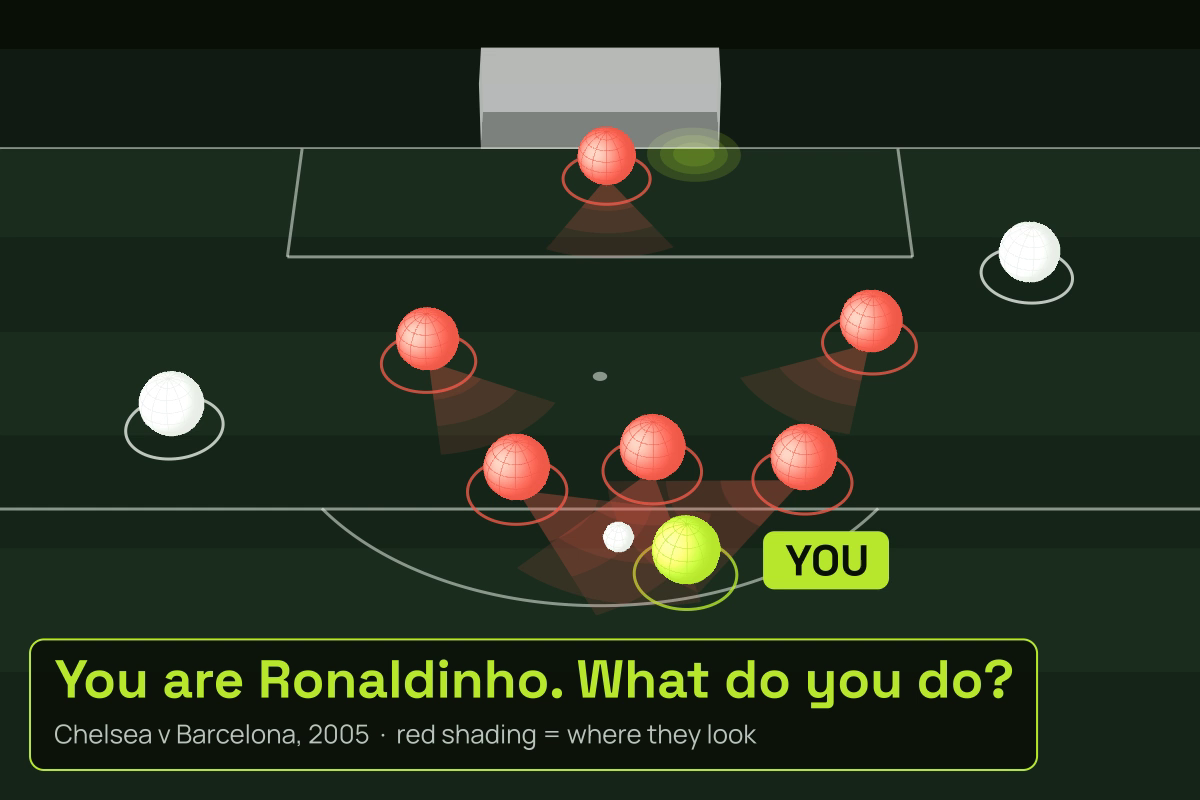
The 10 situations
You are on the wing. A defender is two steps away and closing. A teammate is free inside, 10 yards away.
- A. Dribble past the defender
- B. Pass inside to the free teammate
- C. Kick the ball long down the line
The ball is coming to you in midfield. What do you do first?
- A. Watch only the ball
- B. Look over your shoulder to check space and opponents
- C. Shout for the ball again
Your team wins the ball near your own goal. One opponent is pressing you. A teammate wide is free.
- A. Kick it out of play
- B. Pass to the free teammate wide
- C. Dribble across the front of your goal
It is 2v1. You have the ball. One defender is in front, and a teammate runs next to you.
- A. Shoot from far away
- B. Dribble at the defender, then pass when he commits
- C. Pass at once
Your team leads 1-0 with two minutes left. You have the ball near the corner flag. A defender is behind you.
- A. Shield the ball and keep it in the corner
- B. Cross it blindly into the box
- C. Shoot from a tight angle
Your team just lost the ball and you are the closest player. Your teammates are behind the ball.
- A. Run in and slide tackle
- B. Block the way to goal and slow the attack
- C. Walk back to your position
You are waiting for a throw-in. Your marker stands very close to you.
- A. Stand still
- B. Move away, then step back toward the ball
- C. Shout for it behind your marker
The ball arrives at your feet with your back to goal. A defender is touching your back. A teammate who faces play is close.
- A. Turn at once
- B. Pass first time to the teammate
- C. Hold the ball and wait
A free kick or throw-in is awarded to you. The opponents are turning away to set up. A teammate is free. The referee has not said to wait.
- A. Wait for the coach’s signal
- B. Take it quickly to the free teammate
- C. Kick it long
You are the defender. The attacker has the ball and runs at you. Your teammate is coming to cover you.
- A. Dive in to tackle
- B. Stay on your feet, slow him down, show him to the side
- C. Retreat to your own goal line
Answers
The usual best choice in a youth game. Other choices can work in some games, so talk about it.
B. Pass inside to the free teammate
The pass uses the free teammate and beats the defender without a risky dribble. A quick look inside before the ball arrives is what makes it possible.
B. Look over your shoulder to check space and opponents
A short look before the ball arrives tells you what to do with the first touch.
B. Pass to the free teammate wide
A safe pass keeps the ball. Dribbling across your own goal risks a goal if you lose it.
B. Dribble at the defender, then pass when he commits
Dribbling at the defender forces him to choose. A pass too early lets him recover.
A. Shield the ball and keep it in the corner
Keeping the ball uses up time and may win a throw-in or corner. A blind cross or a hard angle usually gives the ball away.
B. Block the way to goal and slow the attack
Slowing the attack gives teammates time to get back. A slide tackle that misses leaves a gap.
B. Move away, then step back toward the ball
A change of direction makes space. A marker who stays close is easier to lose when you move.
B. Pass first time to the teammate
With a defender on your back, a first-time pass to a player who can see the field is quick and safe.
B. Take it quickly to the free teammate
A quick restart can catch a team that is not set. Only do this if the rules and the referee allow it.
B. Stay on your feet, slow him down, show him to the side
Staying on your feet gives your teammate time to arrive. A dive that misses beats only you.
Want more of this?
We are building a Soccer IQ game for club and travel players. Your child sees a real match moment, makes the call, and then learns why. It is still being built, so there is a waitlist.
When you join, you get one welcome email. After that we write only when early access opens.
New to the idea? Read Soccer IQ for kids: what it is and how to build it.
Soccer IQ test questions
What is a soccer IQ test?
It is a set of game situations where you choose what to do. It checks how a player reads the game: where to look, where to stand, and when to pass, dribble or shoot. It is not a school IQ test.
How do I use this test with my child?
Read one situation aloud. Ask your child to choose A, B or C and say why. Only then read the answer. The talk about why matters more than the right letter. Do the test over a few days if your child gets tired.
Are the answers always right?
No. Real games have more than one good choice, and the best one depends on the score, the field and the players. The answers here are the usual best choice in a youth game. Talk about when a different choice could be better.
What age is this test for?
The situations suit about ages 9 to 14, on full or 9v9 fields. Younger children can try the simpler ones with a parent. Any age can use it as a talking point.
Does a high score mean my child will play at a higher level?
No. This test is for practice and conversation. It does not measure ability, and no test can predict one child’s future in the game.
Read next
Soccer IQ for kids: what it is and how to build it
How to help your child get better at football
Soccer tryouts: dates and what to expect
Updated October 15, 2026. Academy Parent is independent and not linked to any club, league or federation.